
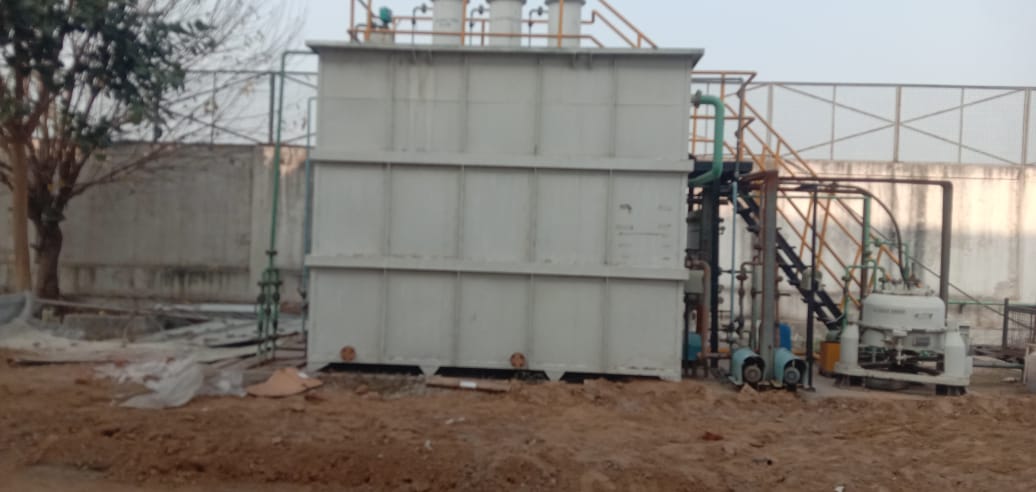
Effluent Treatment Plant
Effluent Treatment Plant (ETP) manufacturers and suppliers should be equipped to handle the complete setup and commissioning process. Trade effluent refers to the wastewater generated as a by-product of industrial processes.
The basic treatment process begins with the effluent passing through a screen chamber to remove floating solids and debris. It then flows into an oil and grease removal tank, where lighter contaminants such as fats and oils are separated. The partially treated effluent is then transferred to a collection and equalization tank, where it is homogenized and aerated using coarse air diffusers to maintain uniformity.
Anaerobic Treatment
From the equalization tank, the effluent passes through an anaerobic filter, where microorganisms break down organic pollutants in the absence of oxygen, leading to a significant reduction in Biochemical Oxygen Demand (BOD) levels.
Aerobic Treatment
Next, the effluent enters the Air Bio-Reactor, where aerobic bacteria further oxidize the remaining organic matter into carbon dioxide and water through the aeration process. This step ensures effective stabilization of the wastewater.
Tertiary Treatment
In the tertiary stage, advanced treatment methods such as filtration, chlorination, or UV disinfection are applied. These processes polish the treated water, making it suitable for reuse or safe discharge, thus promoting wastewater recycling and environmental sustainability.
Features of Effluent Treatment Plant
- Water source: Effluent from the industries
- Treatment stages: Primary, secondary and tertiary
- Installation type: Containerized plug and play
- Automation Grade: Automatic and semi-automatic.
- Capacity: 1 KLD TO 1 MLD
- Technique of treatment: Fluidized Aerated reactor, MBBR Technology , MBR Technology